How to Build a Storyline for Your Pre-Wedding Photoshoot
createsco
November 2, 2026
A pre-wedding photoshoot becomes more meaningful when the photographs tell a story about the couple rather than showing random poses at different locations. You can use your first meeting, favourite activities, shared interests and special memories to create a connected series of photographs. Knowing how to build a storyline for pre wedding photoshoot helps you plan each scene, select suitable locations and decide what you want to capture. With a little preparation, you can create a photoshoot that reflects your relationship and personalities.
1. Start with Your Relationship Story
Before selecting locations or outfits, think about the journey you have shared as a couple. Remember how you first met, where you had your first conversation, your first date and the experiences that brought you closer. These memories can give you ideas for scenes that feel personal rather than copied from another couple's photoshoot.
You can also consider your common interests, favourite places and activities you enjoy together. For example, if you both love reading, a bookstore or library could become part of your story. If you enjoy travelling, you can include a memory from a trip. Select two or three meaningful experiences instead of trying to include every moment of your relationship.
2. Decide What Kind of Story You Want to Tell
Once you have selected your memories, decide how you want to present them through photographs. When planning how to build a storyline for pre wedding photoshoot, think about the mood, setting and activities that best represent your relationship. You can consider these storyline approaches:
- A Love Story: Show how you met, started spending time together and developed your relationship.
- A Day in Your Life: Capture simple activities such as having breakfast, visiting a café or going for an evening walk.
- A Travel Story: Build the photoshoot around a favourite trip, scenic destination or shared interest in exploring new places.
- A Traditional Love Story: Include Indian cultural elements, traditional outfits, heritage settings or meaningful rituals.
- A Shared Hobby Story: Use activities such as dancing, cooking, reading, music or sports to show what you enjoy doing together.
3. Divide Your Storyline into Beginning, Middle and Ending
A good storyline should have a clear sequence so that each photograph feels connected to the next. Divide your plan into three stages: beginning, middle and ending. This will help you decide which scenes to capture and how the photographs should flow when viewed together.
- Beginning: Introduce how your story starts. You could show the couple meeting at a café, walking through a familiar street or noticing each other at a common place.
- Middle: Show how the relationship develops through conversations, shared activities, playful moments and romantic interactions.
- Ending: Show your present bond and excitement about beginning married life together. A sunset portrait, a walk hand in hand or a simple embrace can work well.
For example, a couple can start their story with a first-meeting scene at a café, continue with photographs of spending time together and finish with a romantic outdoor portrait. This creates a connected story instead of a collection of unrelated pictures.
4. Choose Locations That Match Your Story
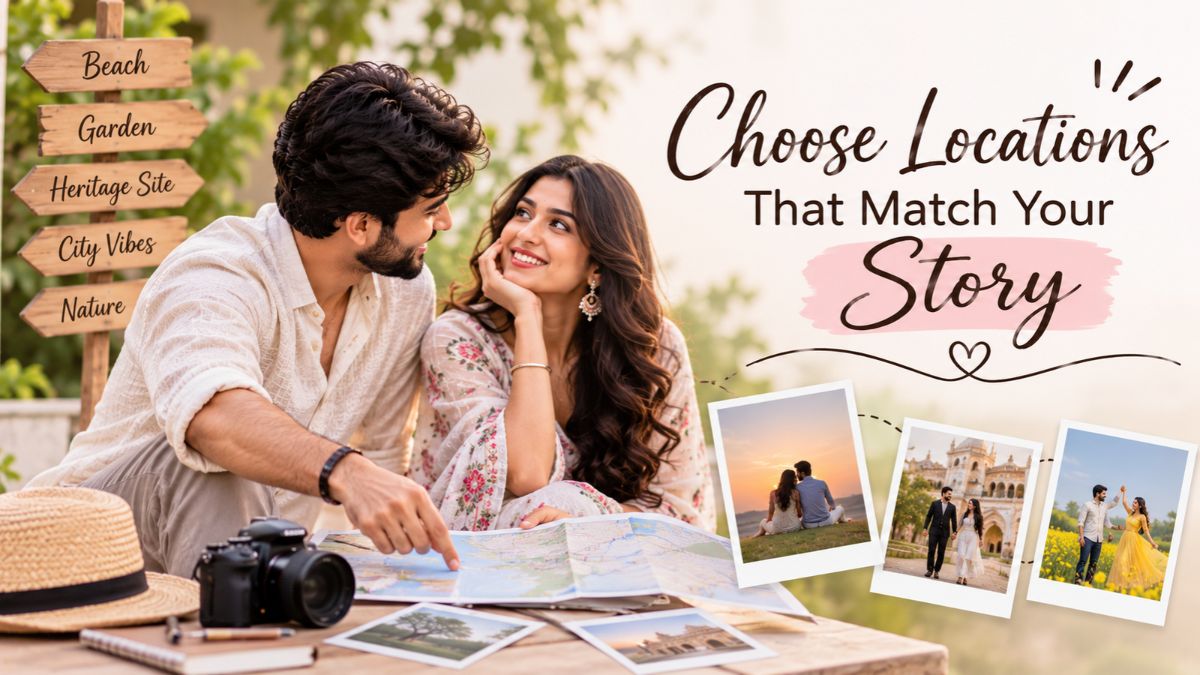
Locations should support the scenes you have planned. A place may look attractive, but it should also make sense for the story you want to tell. For example, a café can represent a first date, while a park can work well for a relaxed scene showing the couple spending time together.
You can consider cafés, gardens, city streets, local markets, heritage buildings, beaches, hill stations or even your home. Select around two or three suitable pre wedding shoot locations based on your concept, travel time and convenience. Avoid choosing too many places because travelling between them can take time away from the actual photoshoot.
5. Plan the Scenes and Activities for Each Part
After deciding the storyline and locations, write down what you want to happen in each scene. Instead of planning only standing poses, think about activities that allow both partners to interact naturally. This makes it easier to capture expressions, conversations and small moments that support the story.
For example, you can plan a scene where both of you walk together and start a conversation, share a drink at a café, prepare food in a kitchen, ride a bicycle, dance to your favourite song or watch the sunset. These activities can also give you natural pre wedding photoshoot poses without making every photograph look staged. Keep the activities simple and choose ones you both feel comfortable doing.
6. Select Outfits According to the Story
Your outfits should match the location, activity and mood of each scene. Casual clothing can work for everyday moments, while traditional Indian outfits may suit a heritage location or a cultural storyline. If you are planning an outdoor activity, choose clothes that allow you to move comfortably.
You can coordinate colours without wearing exactly the same shades. For example, one partner can wear a pastel outfit while the other chooses a complementary colour. If your storyline includes different settings, plan outfit changes in advance. Select your pre wedding photoshoot outfits after finalising the locations and scenes so that the clothing feels connected to the overall concept.
7. Add Props That Have a Meaning
Props can help make your storyline more personal when they connect with your shared memories or interests. Instead of selecting decorative items only because they look attractive, think about objects that have a connection to your relationship.
For example, you can use a book you both enjoy, a bicycle you often ride, a favourite coffee mug, a musical instrument, a letter, an old photograph or a gift from your relationship. These pre wedding photoshoot props can add context to a scene and make the photographs feel more personal. Use only a few meaningful items so that they support the story without taking attention away from the couple.
8. Plan the Photography Style and Important Shots
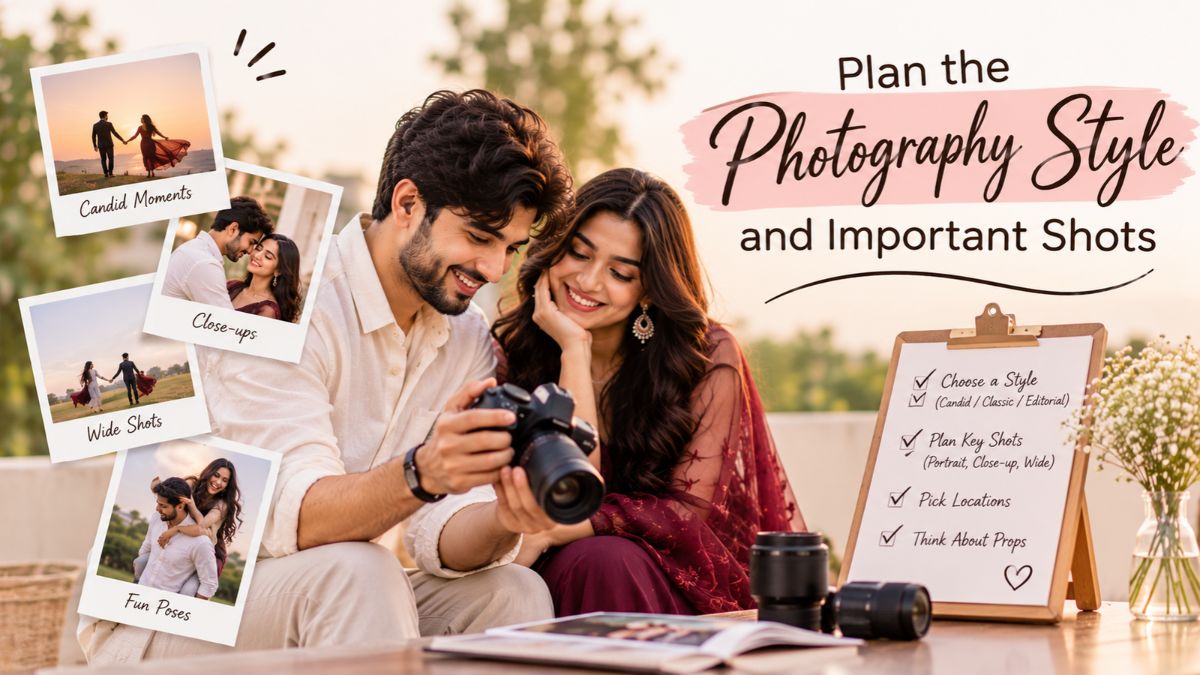
Different photography styles can help you present different parts of your storyline. Candid photographs are useful for capturing natural conversations and laughter, while portraits can highlight important moments. Wide shots can show the location, and close-up photographs can focus on expressions, hands or other small details.
Prepare a simple shot list before the photoshoot. Include important scenes, individual portraits, couple photographs, movement shots and details that you do not want to miss. You can also discuss pre wedding shoot concepts and reference photographs with your photographer to explain the visual style you have in mind. This gives everyone a clear understanding of the photographs needed for each part of the story.
9. Prepare a Photoshoot Schedule
Once the scenes, outfits and locations are finalised, arrange everything in a practical order. Decide which scenes will be captured at each location and how much time you will need for travelling, outfit changes and photography. Check the expected weather and the best time for natural light, especially if you are planning outdoor scenes.
For example, you can start with a morning scene at a café, move to a nearby garden for casual activities and finish with sunset portraits at an open location. Keep some extra time for delays or changes in the plan. A clear schedule makes pre wedding shoot planning easier and helps you complete the important scenes without rushing.
10. Coordinate Your Storyline with the Photographer
Share your complete storyline with the photographer before the shoot. Explain how you met, which memories you want to include and what kind of photographs you expect. Discuss the locations, outfits, activities, props and important scenes. You can also share reference photographs to help communicate your ideas, but allow the photographer to suggest practical ways to capture them.
Choosing someone whose photography style matches your concept is equally important. You can explore different photographer profiles, portfolios, reviews and work samples on CreatesCo to compare available options. Discuss your planned storyline with the selected professional and take their suggestions on scene arrangement, lighting and shot selection. This coordination helps turn your ideas into a practical photoshoot plan.
Conclusion
Creating a meaningful pre-wedding story does not require an expensive setup or a complicated concept. Start with your relationship memories, choose a storyline that reflects your personalities and connect different scenes through suitable locations, activities, outfits and props. Understanding how to build a storyline for pre wedding photoshoot can help you plan the complete experience instead of deciding everything at the last moment.
Take time to prepare your scene sequence, shot list and schedule, and discuss the plan with your photographer before the shoot. The best storyline is one that feels natural to both of you and shows the experiences, interests and connection that make your relationship special.
